
Introduction
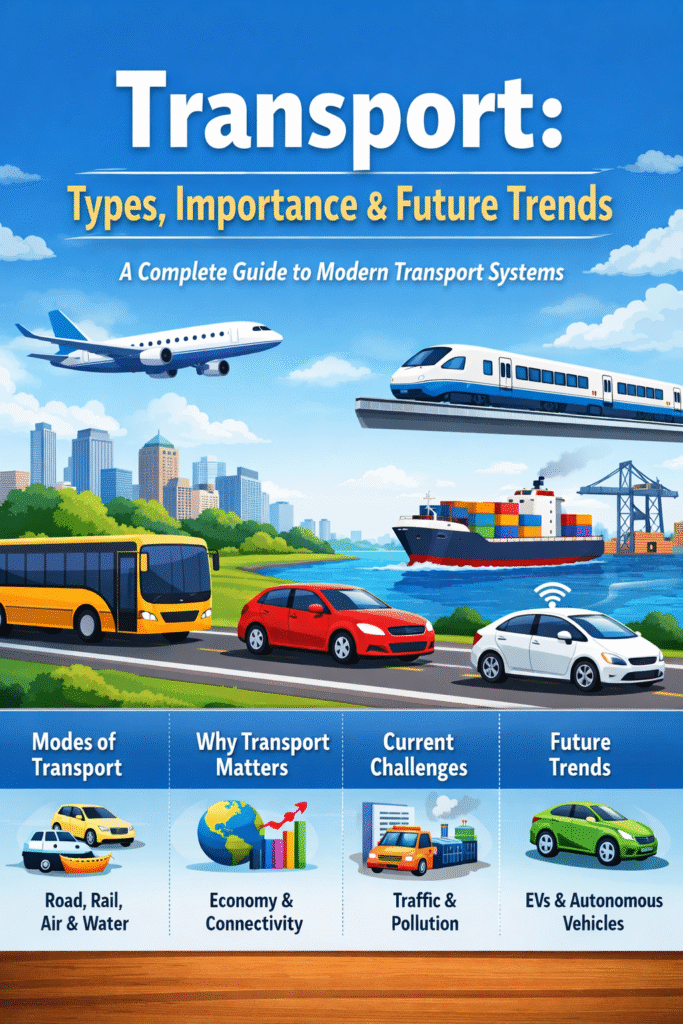
Transport is a fundamental part of human life and development. Without transport, it would be nearly impossible to move people, goods, and services from one place to another. In the modern world, transport systems have become highly advanced, making travel faster, safer, and more efficient. The role of transport is not limited to movement; it also supports economic growth, connects communities, and improves quality of life.
What is Transport?
Transport refers to the process of moving people, goods, or animals from one location to another. The concept of transport has evolved over time, from simple walking and animal-based travel to advanced systems like airplanes and high-speed trains. Today, transport is a key component of infrastructure in every country.
Types of Transport
1. Road Transport
Road transport is the most commonly used form of transport worldwide. It includes vehicles such as cars, buses, trucks, and motorcycles. Road transport is highly flexible and allows direct movement from one place to another.
Key benefits of road transport:
- Easy accessibility
- Flexible routes
- Suitable for short distances
2. Rail Transport
Rail transport is an efficient mode of transport for long distances and heavy loads. Trains are widely used for both passenger travel and freight services.
Advantages of rail transport:
- Cost-effective for bulk goods
- High capacity
- Safer compared to many other transport options
3. Air Transport
Air transport is the fastest mode of transport available today. It is mainly used for international and long-distance travel.
Features of air transport:
- Saves time
- Connects global destinations
- Essential for emergency services
4. Water Transport
Water transport is one of the oldest forms of transport and is still widely used for international trade. Ships and boats carry heavy goods across oceans and rivers.
Benefits of water transport:
- Economical for large shipments
- Environmentally efficient
- Ideal for global trade
Importance of Transport
Economic Growth
Transport plays a major role in economic development. It helps industries move raw materials and finished goods efficiently, boosting trade and business activities.
Social Development
Transport connects people from different regions, making it easier to communicate, travel, and share cultures. It strengthens social relationships and unity.
Access to Opportunities
With proper transport systems, people can access education, healthcare, and job opportunities. It improves living standards and overall development.
Challenges in the Transport Sector
Although transport is essential, it also faces several challenges:
- Traffic congestion in urban areas
- Environmental pollution from vehicles
- Rising fuel costs
- Lack of infrastructure in rural regions
These issues highlight the need for better planning and sustainable transport solutions.
Future of Transport
The future of transport is driven by innovation and sustainability. Governments and companies are investing in new technologies to make transport more efficient and eco-friendly.
Upcoming trends in transport:
- Electric vehicles (EVs)
- Autonomous (self-driving) vehicles
- Smart transport systems
- High-speed rail networks
These advancements will make transport faster, safer, and more environmentally friendly.
Conclusion
Transport is an essential part of modern society, enabling movement, trade, and communication. From road transport to air transport, each mode plays a unique role in our daily lives. As technology continues to evolve, the transport sector will become more advanced and sustainable, ensuring a better future for everyone.
SEO Elements (Bonus for Ranking 🚀)
Primary Keyword: transport
Secondary Keywords: types of transport, importance of transport, modern transport systems
Meta Title:
Transport: Types, Importance, and Future of Transport Systems
Meta Description:
Learn about transport, its types, importance, challenges, and future trends. A complete guide to understanding modern transport systems.